
Why Food Matters
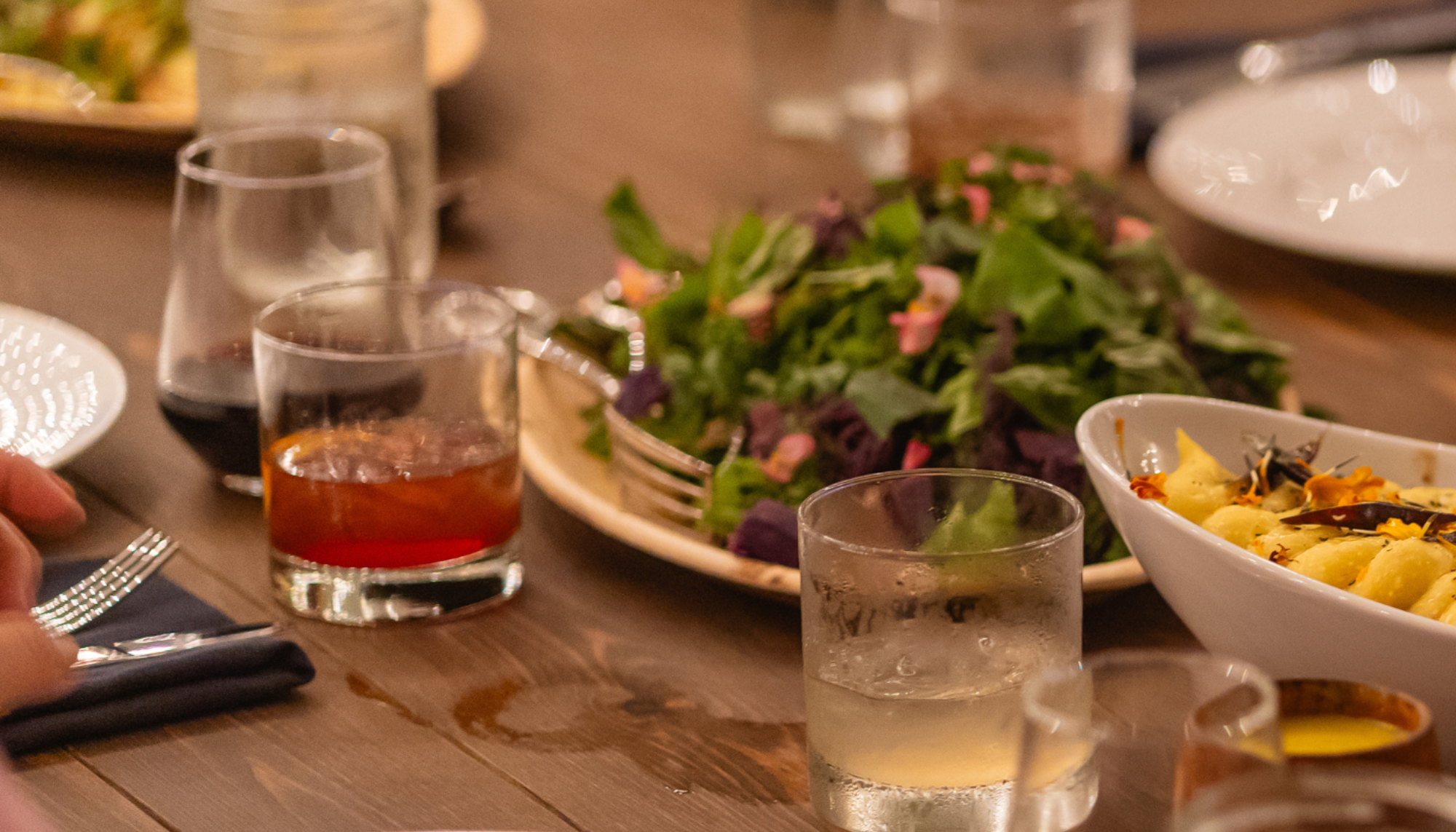
Food has always been where conversation begins. Before ideas take shape or language finds its footing, there is the shared act of sitting down together: preparing, serving, tasting, and being present with one another. Again and again, we’ve seen how much intention it takes to make those moments possible – through the people who cook, host, gather, and create space for others to meet.
As we enter our fifth year of the Common Ground Summit, we find ourselves returning to food with renewed intention. Not as metaphor, but as practice – as something lived and shared. In unsettled times, food offers orientation: to where we come from, to the wider world, and to one another. It reminds us that connection is not abstract. It happens at the table.
In speaking with members of our community who work with food and food culture, we’re reminded that food’s power shows up in distinct but overlapping ways. Again and again, their work points to three forms of connection: across time, across place, and with one another. These are not abstract ideas, but lived experiences, shaped through practice.
Across Time
Food connects us across time. Recipes are passed down through generations, learned by watching and doing, shaped by memory and circumstance. They reflect where we come from, but they also change as they move forward – adapting to new kitchens, new people, and new needs. In this way, food doesn’t just carry history; it helps create it. It marks how people survive, gather, celebrate, and remember.
In his book The Last Sweet Bite, human rights advocate Michael Shaikh reflects on the role food has played throughout his life and work across conflict zones and cultural divides. “Food is powerful. But I have always been reluctant to ascribe it mystical powers. However, this book has forced me to admit now that food is indeed something of a skeleton key.” For Shaikh, meals have opened doors – introducing him to people, communities, and stories he might never have otherwise encountered – shaping not only his understanding of the world, but his sense of self within it.
Cooking is both an act of continuity and of choice. What we make today is informed by what came before, but it is also shaped by the present moment. That power is not lost on those who seek to control or erase culture; throughout history, food has been protected, shared in secret, or deliberately stripped away because of its ability to bind people together and sustain identity. In this way, food becomes a record of lived experience – not fixed or preserved, but practiced and renewed over time.
Across Place
Food also connects us to places beyond our own experience. Through ingredients, techniques, and traditions, we encounter cultures and histories we may never otherwise access directly. A dish can offer a glimpse into a landscape, a way of life, or a set of values without requiring explanation.
Through his immersive venture The Infinite Table, Peter J. Kim uses food as a way to transport guests across borders. As he puts it, “Food is an essential marker of cultural identity. Show me how you eat and drink, and I can see who you are. It’s telling that Bad Bunny’s halftime show kicked off in a sugarcane field and went straight to coco frío (chilled coconut water) and piraguas (shaved ice desserts) to showcase Puerto Rican culture. It’s our lifeblood—what distinguishes us and, ultimately, what unites us too.” For him, food is not just flavor or presentation, but a visible expression of history and belonging – what distinguishes a culture and, at the same time, what can unite people around shared experience.
These encounters invite curiosity rather than certainty. They ask us to listen through taste and texture – to notice rather than to categorize. Food reminds us that learning does not always come through words alone, and that connection across distance depends as much on respect as it does exposure. In this way, food allows us to engage with the world not as something to be consumed or simplified, but as something to be met thoughtfully, and from where we are.
With One Another
At its most immediate, food brings people together. Sharing a meal creates a common starting point – one that cuts across difference and formality. Conversations unfold more easily when there is something shared at the center, and time is structured around being together rather than moving on.
Through the salon series she hosts, Cari Borja approaches gathering as a deliberate act of connection. Her dinners bring together people from different disciplines and backgrounds – food, art, film, fashion, and beyond – not simply to dine, but to engage. In her writing on the art of gathering, she reflects on the importance of intention: who is invited, how the space is held, and what kinds of exchanges become possible when people feel welcomed and at ease. In that setting, food becomes more than a meal; it becomes the structure that allows conversation, curiosity, and recognition to unfold.
Food creates conditions for connection when those conditions are thoughtfully shaped by people who understand the table as a place of care, not just convenience. Through hosting, cooking, and making space for others, people meet, talk, listen, and stay a little longer. Relationships begin in ordinary ways – over a table, through shared effort, through attention – and often continue beyond the moment itself.
What We Carry Forward
We continue to learn about the ways food creates connection through the people we spend time with and the people who cross our paths along the way. Each brings their own relationship to food, shaped by where they come from, who they cook with, and what food has meant in their lives. Even when we arrive with shared intentions, we are often struck by how differently a single practice can shape memory, identity, and belonging.
Food is familiar, but it is never just one thing. The same meal can hold history, curiosity, comfort, or discovery, depending on who is gathered and why. Paying attention to these differences, and to the people who make these moments possible, reminds us that food is more than nourishment. It is one of the ways people understand their world and find their place within it, when approached with care.
