
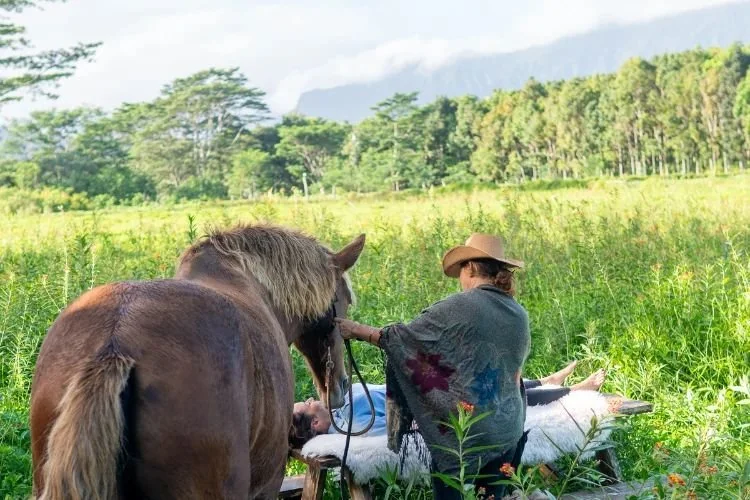
Wellness has become something we are often encouraged to add to our lives: a routine, a retreat, a protocol, another way to optimize how we eat, move, sleep, or recover.
But when we look at communities known for longevity, many of the things associated with living well are much less separate from daily life. People move because movement is part of how they get through the day. Food is connected to place and community. Relationships are maintained over time. Work, rest, purpose, and social life are part of the same larger rhythm.
That way of thinking about wellbeing feels especially relevant to Kaua’i, not because life on the island is somehow removed from difficulty, but because the ways people depend on and care for one another are often very visible.
We have seen that recently in the response to damaging storms, just as we saw it during the pandemic: neighbors checking on one another, restaurants and businesses finding ways to feed people, organizations responding to what their communities actually need, and people stepping in where they can be useful. That instinct to look out for one another is not an abstract idea about island life. It shows up in very practical ways.
For those of us who come to Kaua’i as guests, that also means paying attention to the histories, relationships, culture, and knowledge that shape the island without assuming that spending time there gives us ownership of any of it. It means arriving with respect, being willing to listen and learn, and thinking about how we participate in a place rather than simply what we take from it.
Food has always been one of the most natural ways into that conversation at Common Ground.
The Summit itself grew from the communities that help bring food to the table and the community that forms around the table. Farmers, growers, chefs, producers, cultural practitioners, and the people who gather to eat all become part of the same exchange. Food gives us a point of commonality – something familiar enough to bring people together while still carrying the history, traditions, and particular character of where it comes from.
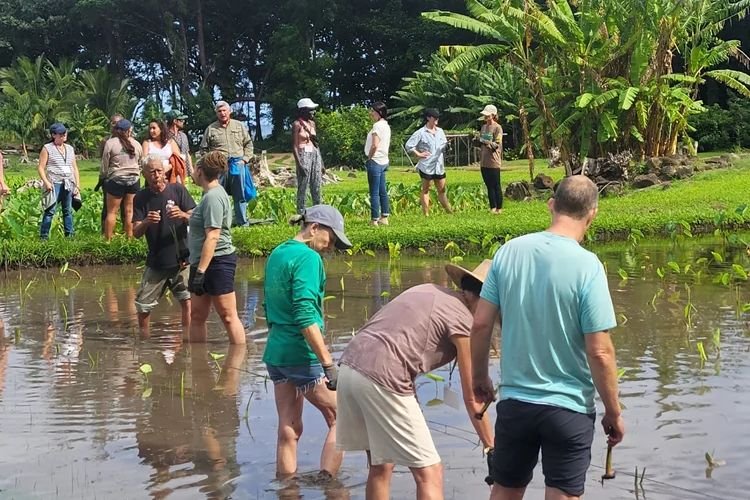
Our community events work in a similar way. People may come together around a meal, music, making something, a conversation, or simply the chance to spend time with one another. The activity gives everyone a reason to gather, but the community is built in what develops around it: familiar faces, repeated conversations, people learning from one another, and the relationships that grow because people keep coming back.
That is also closer to what people have told us feels restorative about the Summit. It is not simply a break from everyday life, or the fact that people are eating well, spending time outside, or participating in activities they might associate with wellness. Those things can all be part of the experience. But what people tend to talk about afterward is the feeling of being around others who care deeply about what they are doing and who may be approaching the same larger challenges from very different directions.
Being around people who share that sense of responsibility, even when they don’t share the same answers, can make it easier to slow down, listen, ask better questions, and remember that none of us is working in isolation. It creates room to be curious rather than perform expertise, and to spend time with people whose experiences may compliment or expand our own.
For us, Kaua’i is part of that conversation not because we want to make claims about what the island can do for someone, but because being there gives us an opportunity to notice more: how other people understand their relationship with a place, what it looks like when a community responds to its own needs, and the difference between moving through somewhere as a consumer and taking the time to understand a little more about the world you have entered.
The point is not to recreate Kaua’i somewhere else, or to suggest that spending time on the island offers a simple answer to how we should live. It can, however, give us a reason to look more closely at the places we already belong to and the relationships, routines, and communities that shape our own lives.