Lei: The Meaning We Carry
Resonance Across Cultures
Across cultures, people have long woven flowers or natural materials together to mark relationships. In India and Thailand, garlands are made by hand and offered to honor family ties, ceremonies, and moments of transition. These practices are not the same, nor should they be treated as interchangeable. But they echo a shared human impulse: to gather individual elements, each with its own story, and bind them together with intention. Meaning emerges not from uniformity, but from relationship.
Making and Giving
Lei are often understood at a glance – but beneath what we see is a practice shaped by time, care, and relationship.
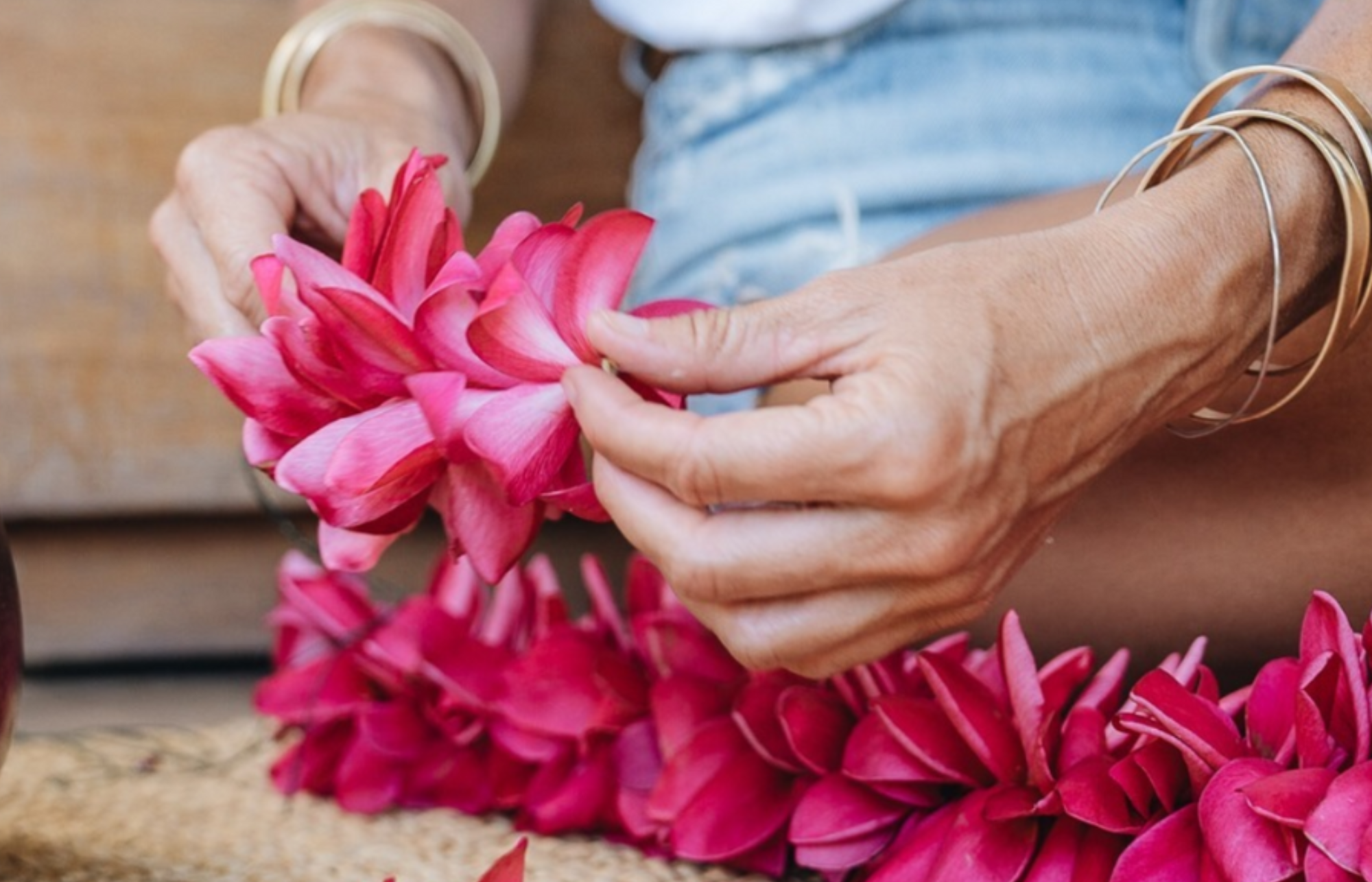
A lei is not an object so much as an act. It is made with intention, for a specific person and moment. Time is spent gathering materials, choosing what belongs together, and shaping something that will be shared. When a lei is offered, it carries affection, respect, gratitude, or remembrance – a recognition of relationship. It marks connection.
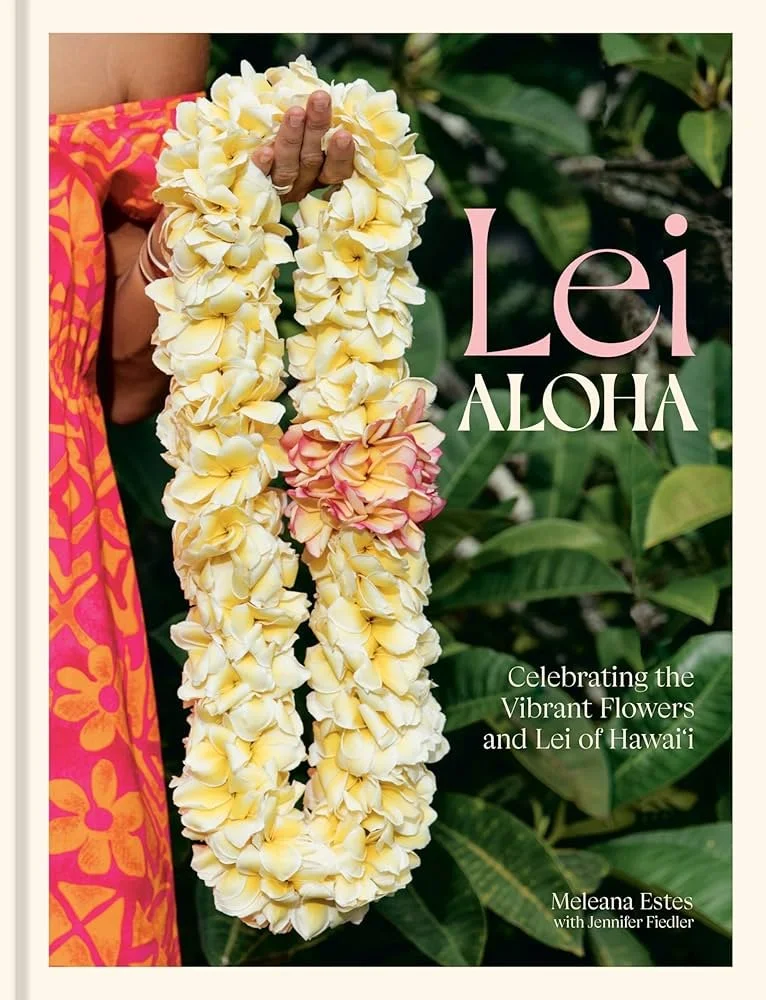
In her book Lei Aloha, Meleana Estes reflects on lei as a way of weaving memory and meaning together: an expression of aloha shaped by care, lineage, and intention. Rather than something made to be consumed or displayed, lei hold the stories of who made them, who they are for, and why they were given. Their meaning lives in the relationships – not just in the finished form.
Practice and Presence
In Hawai’i, lei have long been a way of expressing care and belonging. They are given to celebrate, to honor, to welcome, and to grieve. What gives them meaning is not simply the finished form, but the process behind it: gathering materials, preparing them by hand, and offering them with presence. Even how a lei is received, worn, and eventually returned to the land carries significance. These gestures reflect respect – not just for the lei itself, but for the relationship it represents.
When Meaning Is Thinned
Over time, some of that meaning has been thinned. A lei offered in welcome still holds the gesture of greeting – a moment of arrival, of being received. But in many contexts, the depth of that practice has shifted. As tourism shaped the image of Hawaiʻi for outside consumption, culturally significant practices were increasingly reduced to symbols – easy to recognize, easy to reproduce, and often detached from their original context.
This shift is not only cultural, but material. Changes in flower availability and industry have also played a role: as demand grew and local production could not keep pace, flowers once gathered from nearby forests and gardens gave way to blooms sourced from elsewhere. Lei made from materials tied to specific islands and seasons became more standardized, more interchangeable.
In this shift, lei – once rooted in relationship and intention – can begin to function more as decorative adornment than as a living gesture. What is at risk is not meaning itself, but the depth of context and care that gives the practice its full resonance.
What a Lei Teaches
Seen through this lens, the lei becomes more than adornment. It becomes a way of understanding how care is practiced – through attention, patience, and responsibility. Chef Kealoha Domingo has spoken about lei as a metaphor for relationship: many individual elements, each with their own integrity, brought together through purpose and effort. Like food, a lei reflects the choices behind it: where materials come from, who does the labor, and who it is made for. Meaning is not inherent in the object itself, but in the values carried through its making.
The lei, in this sense, becomes a quiet teacher. It reminds us that connection is not symbolic or abstract, but something we are responsible for: shaped by our choices, our care, and how we show up for one another. Piece by piece, person by person, it asks us what it means to carry meaning forward with intention.