
How we nourish ourselves through visual art, music and storytelling.
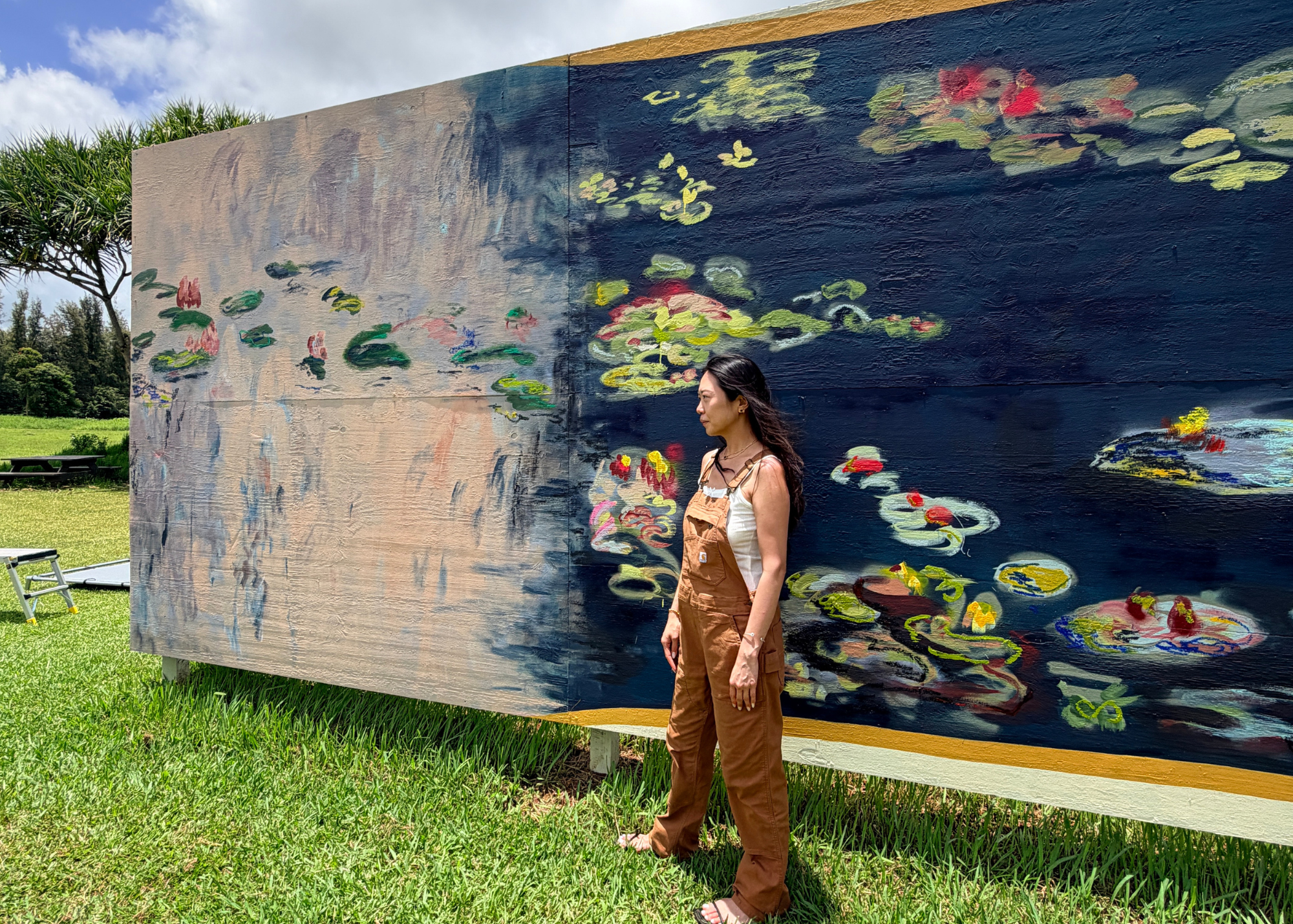
We often talk about nourishment through food, land, and care for the body. But people are also nourished by the chance to make meaning together. Music, visual art, and storytelling can give form to memories, feelings, and questions that are difficult to express directly. They create room for reflection and play, but also for exchange: a story can allow someone else to recognize part of their own experience; music can bring a group into the same moment; and making something together can turn strangers into collaborators.
At Common Ground, that understanding shapes the role art plays across the campus and at the Common Ground Summit. Artists and musicians are not simply invited to present finished work. They help create the conditions for people to slow down, pay closer attention, and encounter people together. Billy Martin has used sound and rhythm to bring people together. Kaplan Bunce has invited people to experiment with paint and participate in making something collectively. Pui Tiffany Chow has used drawing as a way to encourage stillness, observation, and connection. Installations by Steven Dean and Anna Wittenberg have offered other ways to experience the campus, while Andrew Huston has explored the relationship between art and place. The Summit has increasingly treated creativity not as an addition to its conversations, but as another way of thinking, listening, and understanding together.
The Common Ground Ensemble Artist Award extends that commitment beyond the annual gathering. Through a residency on Kaua’i and continued connection to the wider Common Ground community, the award is intended not only to recognize an artist’s work, but to give that work time, space, and support to develop. Pui Tiffany Chow was selected as its inaugural recipient in 2025 and later joined the Summit, where she shared a drawing practice centered on close attention to another person. Her experience shows how an initial invitation can grow into an ongoing creative relationship.
That relationship continued when she returned to the campus as one of the artists who contributed to An Imparting Landscape, the mural created along the construction fence surrounding the future restaurant and events space. The mural brought together eleven artists, each bringing a distinct visual approach to the 500 foot wall.
There is something fitting about turning a temporary construction barrier into a place for art. A fence usually marks what is unfinished or inaccessible. Here, it became something people could stop beside, look at, and experience in the present. The wall marks a space that is still becoming something, and the mural gives that in-between moment a life of its own. It allows the campus to hold both the practical work of building and the creative work of imagining what a place can become.
The mural also offers a useful picture of collective creativity in action. People do not need to share the same style, experience, or interpretation in order to create something together. The differences remain visible, but are placed in relationship with one another. What emerges is not a single point of view, but a larger work shaped by the collective.
Art and storytelling can create that same kind of space within a community. A story can carry memory, contradiction, and uncertainty without needing to resolve everything immediately. Music can create a sense of connection before anyone speaks. Making something together can help people move past expertise and toward curiosity, experimentation, and trust.
That is part of what makes creativity so nourishing. It reminds us that community is not only built through plans, solutions, or conclusions. It is also built through the moments when people are given permission to be curious, surprised, vulnerable, and unfinished together.
