
Finding our way back to play
by Amanda Dugan
Whenever people come over to my apartment, they’re usually surprised by how many activities I’ve managed to fit into a one-bedroom.
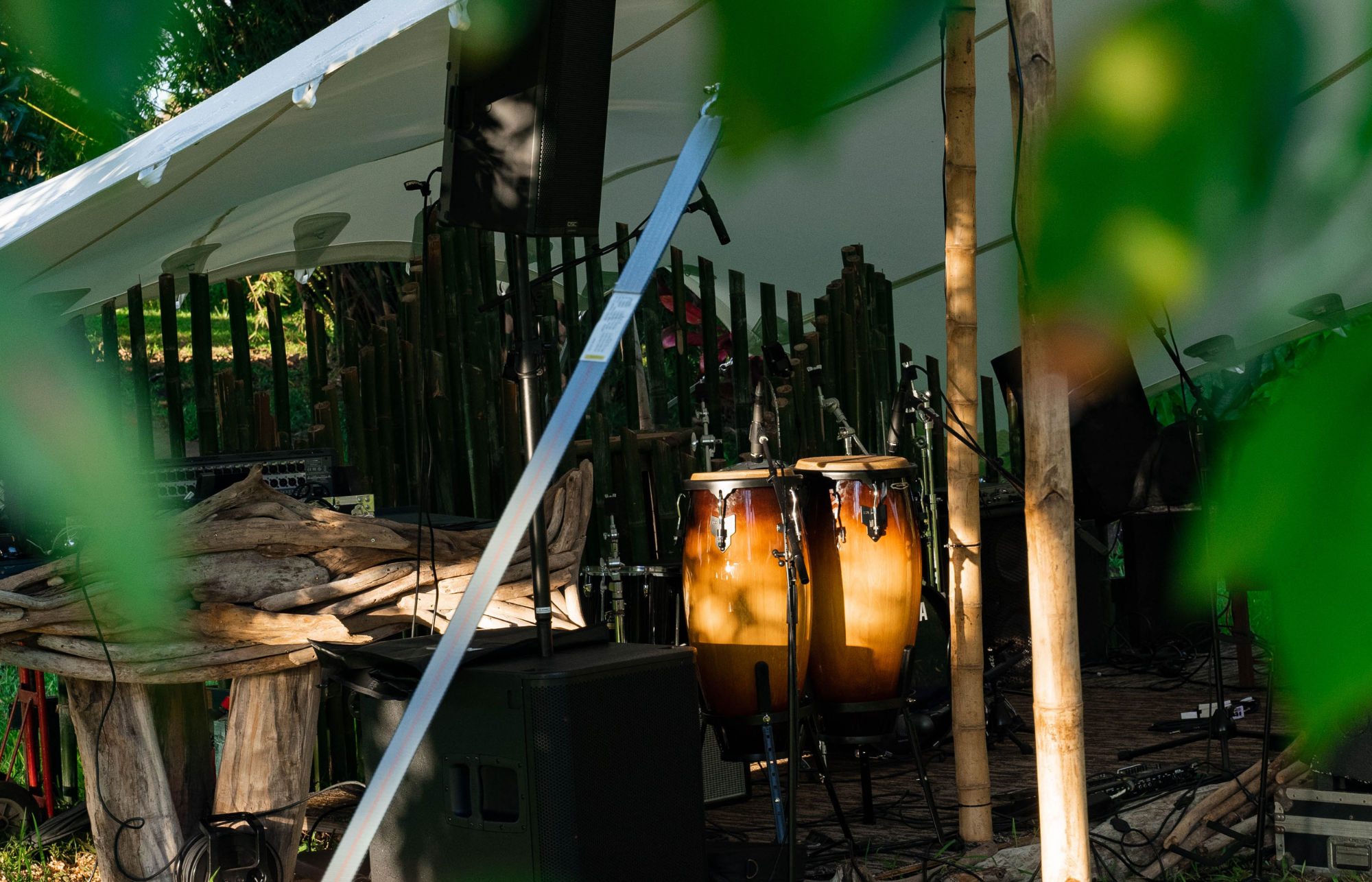
There are puzzles, coloring books, embroidery projects, and, at the moment, at least six instruments: a banjo, a theremin, a ukulele, a kalimba, a glockenspiel, and a piano.
I keep these things around because they bring me joy – to pick something up, try it, make something a little weird, and then put it down again.
What I love even more is watching other people discover them. Someone will notice the theremin or the kalimba and immediately ask what it is, or if I actually play it. And the answer is (in the loosest possible interpretation of the word): yes, I play.
Then they’ll pick up an instrument and start messing around with it, and I love watching what happens. They get curious, they laugh, they make some weird sound or figure out a few notes, and suddenly they’re just playing. Not trying to be good at it, not trying to make anything out of it – just playing.
I think that’s the part that makes me happiest. Not the instrument itself, but the reminder that people are still so available to joy when there’s a small enough opening for it.
I don’t think that opening is just about access to the thing itself, though. It’s also about feeling safe enough to try it – to be okay with being bad at something, to be a little silly, and to be free of feeling like anyone is measuring you.
Because somewhere along the way, I think a lot of us forget that it’s okay to enjoy things without needing to do something with them. You don’t have to become a musician because you own a banjo. You don’t have to get better at embroidery because you bought thread. Not everything has to become a skill, a project, a “side hustle”, or something that defines you.
Some things can just be fun.
This is something that I think about a lot. What happens to play as we get older? When does it become something we shouldn't make time for? When do we stop making time for joy?
I spoke to Billy Martin, drummer and percussionist of Medeski Martin & Wood, about this recently, and he pointed to “the conditioning from childhood into adulthood be it religious, cultural, educational systems, social behaviors.”
I think that’s true. We’re shaped by all kinds of systems that teach us what counts as valuable, serious, responsible, worthwhile. Over time, you learn what things have “value” and what doesn’t – and, by extension, what parts of yourself seem valuable when they fit within those lines.
Still, that doesn’t make play less important. If anything, it makes the case for it stronger.
The National Institute for Play talks about play as something deeply connected to well-being, creativity, and connection. Psychology Today makes a similar case for why adult play matters, especially as responsibilities take over. In an NPR conversation with Dr. Stuart Brown, he describes play as something done for its own sake – where the experience matters more than the outcome.
As I was reading these articles and listening to the words of experts, I had mixed feelings. On one hand, I was happy to see real acknowledgment that play is not just something we outgrow, but an important part of being human. On the other, it felt a little sad that so many of us need instructions for how to find our way back to it.
Which makes me think about something Billy said earlier in our conversation: that creativity starts at birth, and that feeling safe, secure, and loved is the foundation for play, experimentation, discovery, and more creativity.
I keep coming back to that idea of safety. Because maybe part of what happens as we get older is not just that we forget how to play, but that we lose some of the conditions that make play feel possible. The comfort. The permission. The sense that you can be a little weird or bad at something and still be accepted and part of something.
When you’re little, if you’re lucky, play is just there. You don’t have to justify it, you don’t have to be good at it. You can make something strange, make up a rule, abandon it, start over, laugh, be ridiculous. More than that – it’s encouraged and protected by the people you trust to take care of you. Schools make time for recess and gym. Parents encourage kids to go outside and play. Countless children join clubs and sports teams. And it’s not just you: everyone is in it together, making up the rules as they go.
But as we get older – ironically, as we become the adults entrusted to take care of ourselves – that changes. We become more aware of how we’re perceived. We learn to avoid embarrassment, we start to measure ourselves and our abilities against a series of ever-growing metrics. And play becomes harder to access, not because we no longer want it, but because we no longer have that same sense of safety. The feeling that you can be a little weird or bad at something and still be supported, encouraged, and a part of something.
There’s a kind of safety that comes from doing something slightly silly with other people. It lowers the stakes. It gives everyone a little permission. It reminds us that we can be curious, imperfect, and still belong – which feels like a real contrast to a world that is always asking us to improve, solve, optimize, or become better versions of ourselves.
Maybe that’s part of why it matters. Not because play is an escape from everything serious, but because it gives us a place to practice being less guarded. Less polished. Less useful. More willing to meet each other without having to prove something first.
When I asked Billy how people might find their way back without some big event forcing the shift, he said, “it’s a game of chance. could roll dice (literally or figuratively) and take direction from that.”
I like that. Maybe play doesn’t always need to come from some dramatic breaking point. Maybe sometimes you just need to create the smallest possible opening – roll the dice, pick up the instrument, be curious, see what happens.
Not because it leads to anything. Just because it feels good to remember you can.